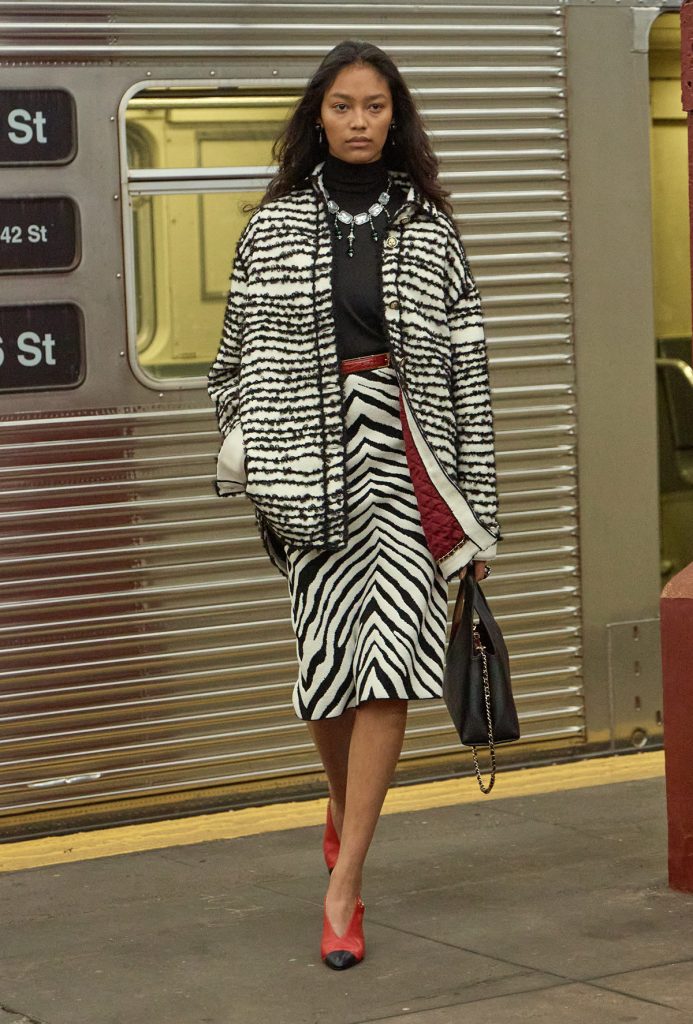
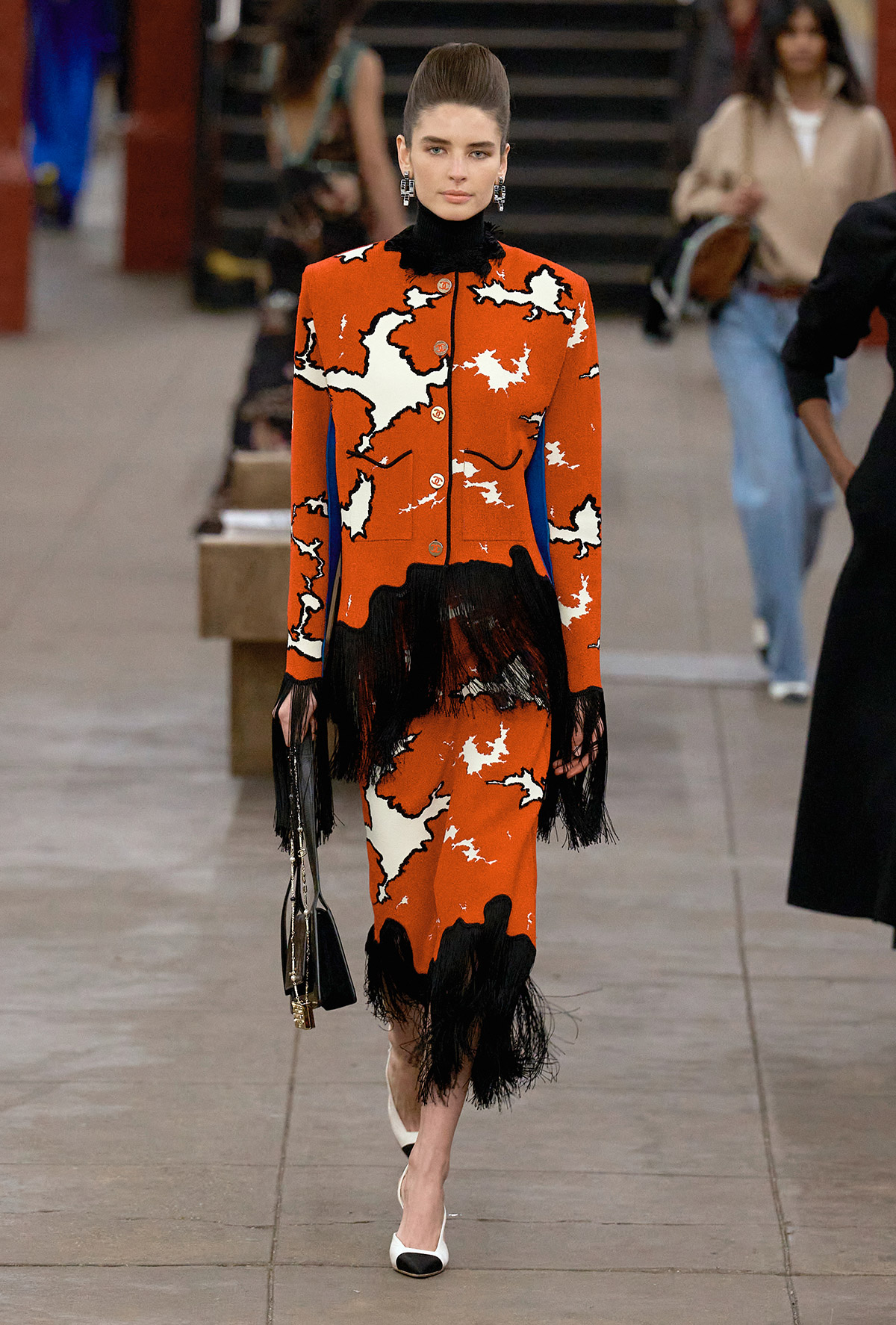
Staging his first Métiers d’art collection for the house, Matthieu Blazy looked to the New York subway to explore how exceptional craft meets everyday reality.
Summary
- Matthieu Blazy’s first Métiers d’art collection for Chanel uses the New York City subway as a backdrop for exploring the intersection of high craft and daily life.
- The collection mixes historical references, particularly Art Deco, with contemporary pop culture archetypes found in the city.
- The specialized skills of the Maisons d’art are highlighted, applying intense craftsmanship to seemingly ordinary garments like denim and flannel.
The New York City subway functions as the city’s circulatory system, a place where disparate lives momentarily converge. It is a space constantly moving, a microcosm of New York itself.
For his debut Métiers d’art collection at Chanel, Matthieu Blazy adopted this setting, treating the commute as cinema. The collection presents a procession of archetypes, the glitter and grit of New York seen through a filmic lens. This is Chanel’s “sub(way)-culture,” where the ordinary is improved with the aid of the Maisons d’art.
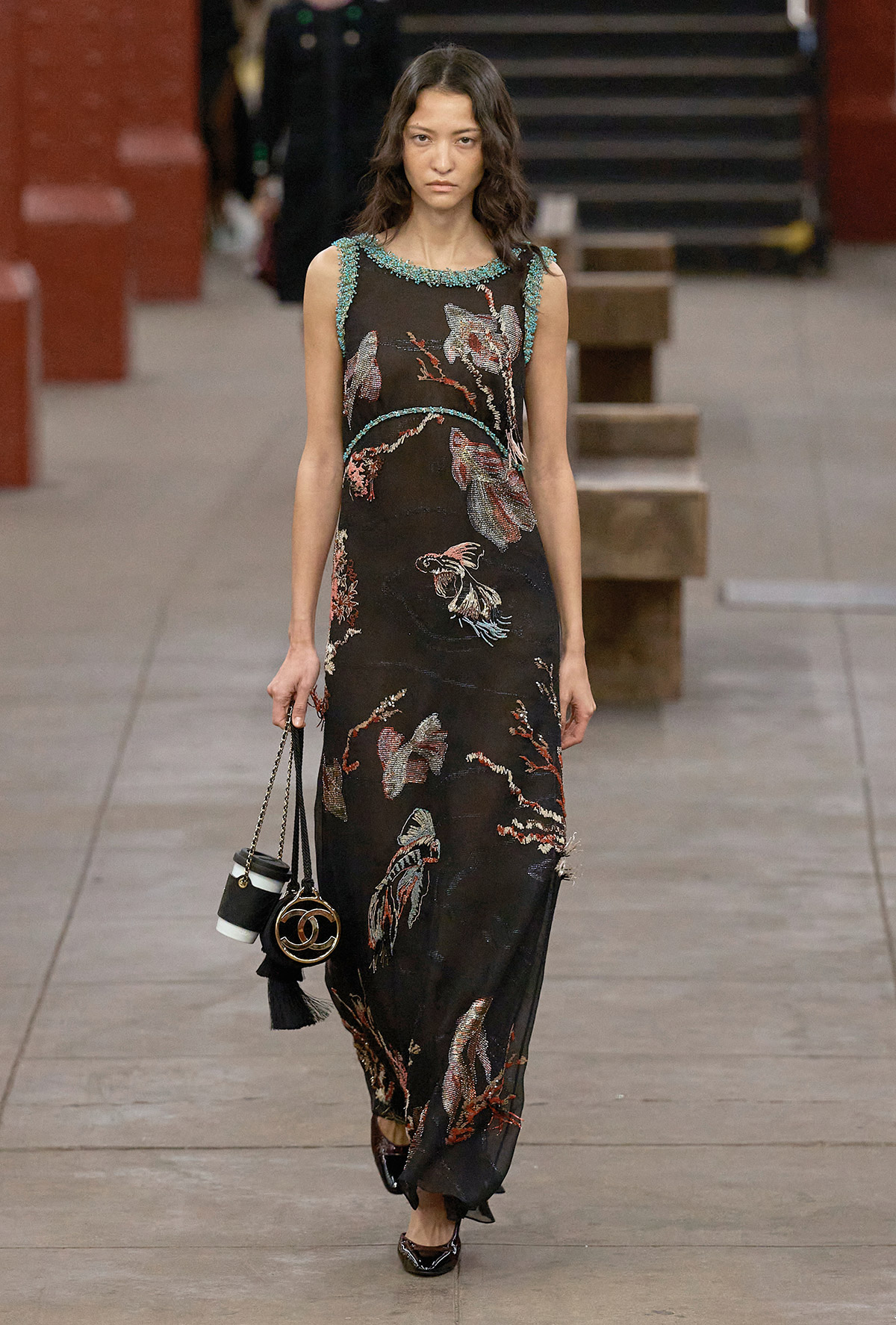
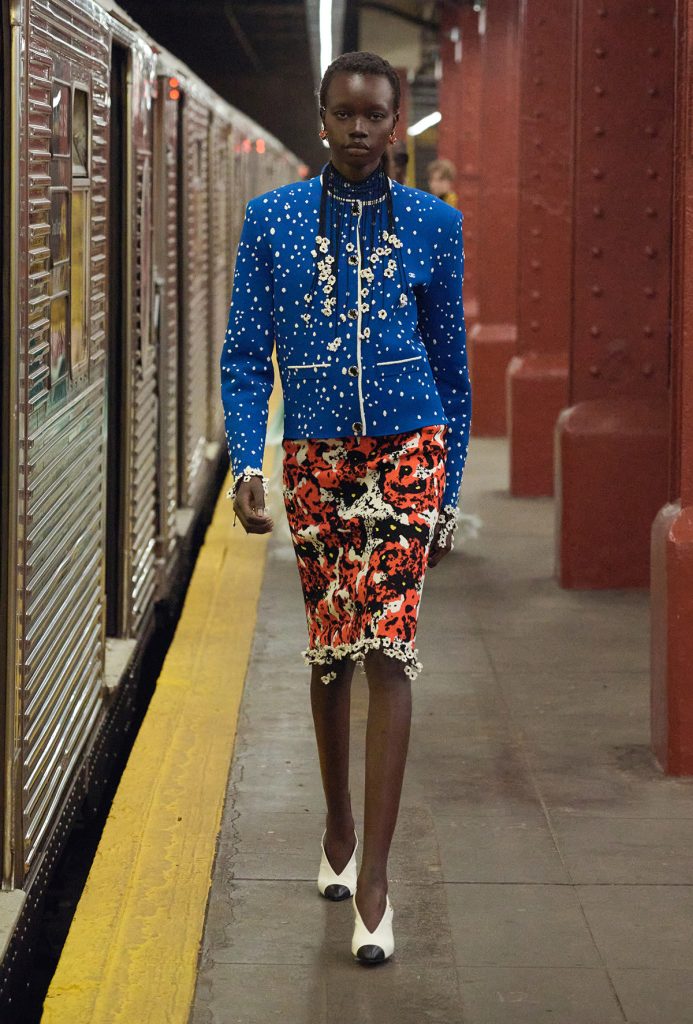
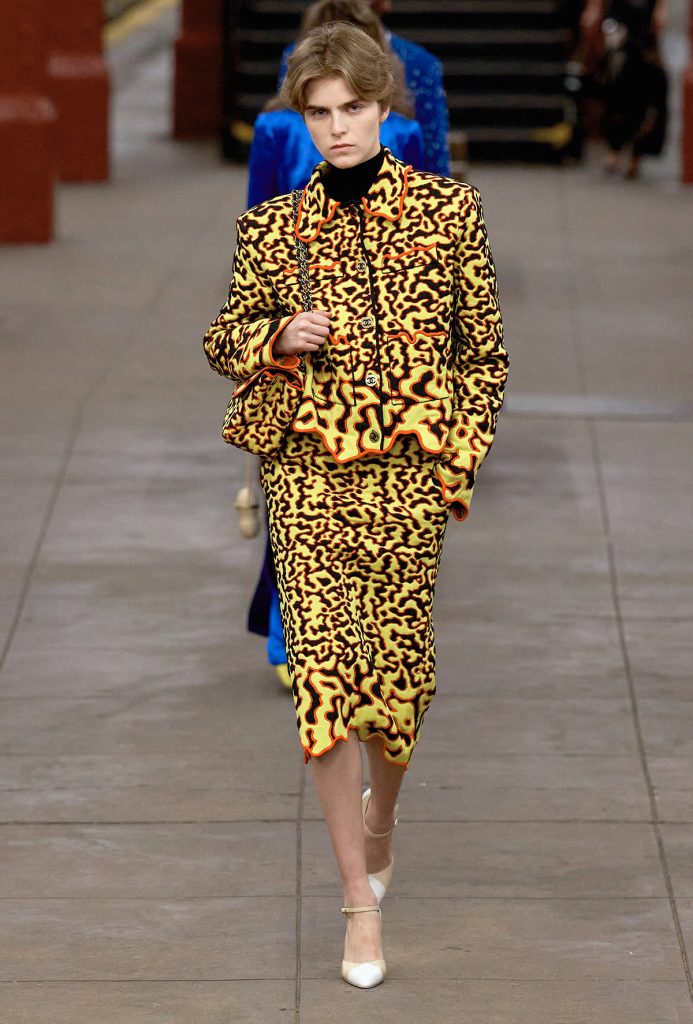
The concept centers on a love story between Paris and New York, uniting the exceptional savoir-faire of the le19M ateliers with the immediate impact of pop. The timeline is non-linear, moving from the 1920s to the 2020s, blending Art Deco extravagance with a modern lounge reality.
In this mix of elevated craft and pop culture, a witty high style occurs. “Lingerie denim” was paired with involved embroideries. An archive Art Deco dress, reconfigured with Lesage embroidery and fringed feather work by Lemarié, was worn with illusion chinos, a modern flapper’s choice.
The men’s shirt was revisited again. A lumberjack flannel shirt was reimagined in rich wool boucle tweed, the utility of the pattern meeting the luxury of the textile. It was weighted with a Chanel chain.
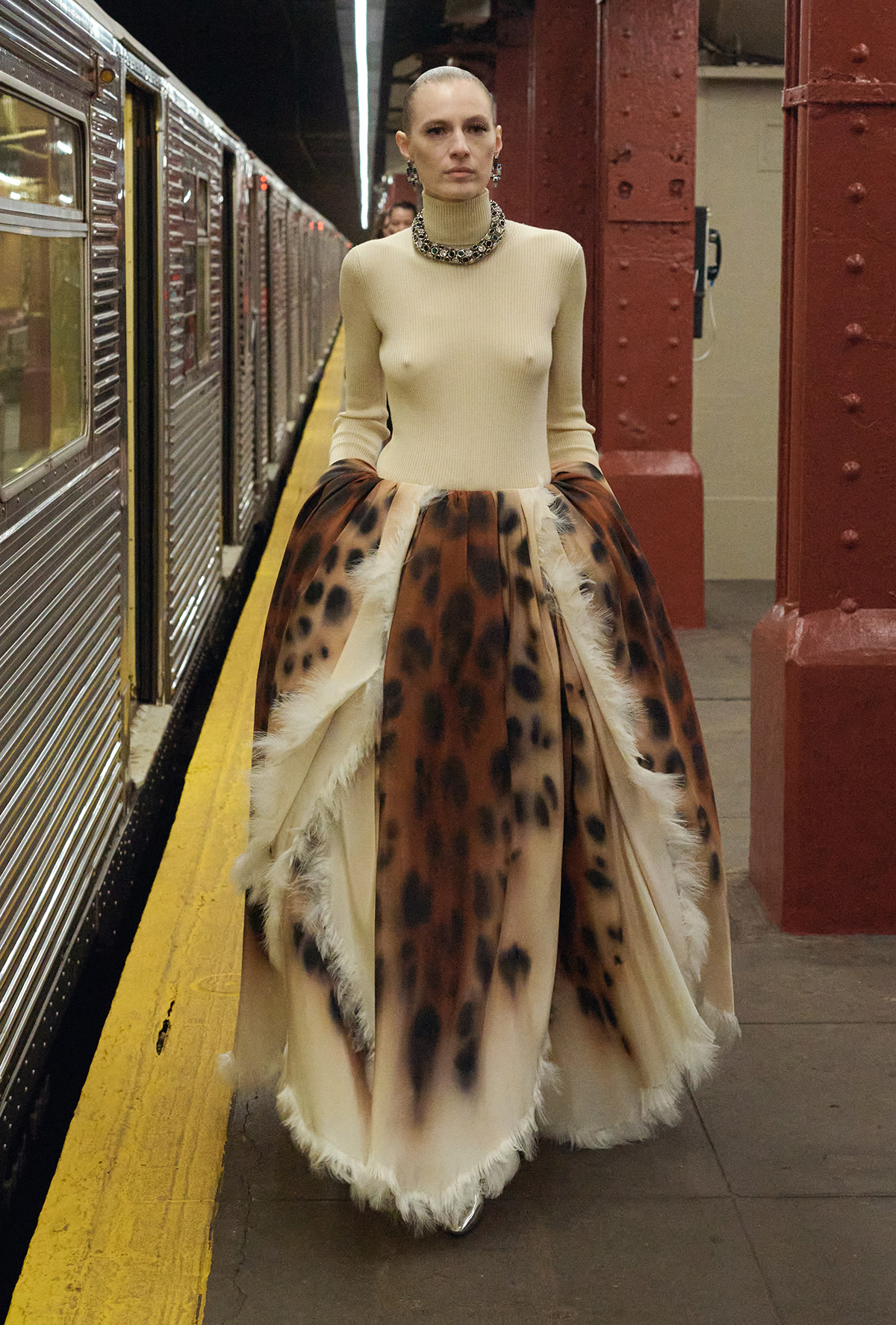
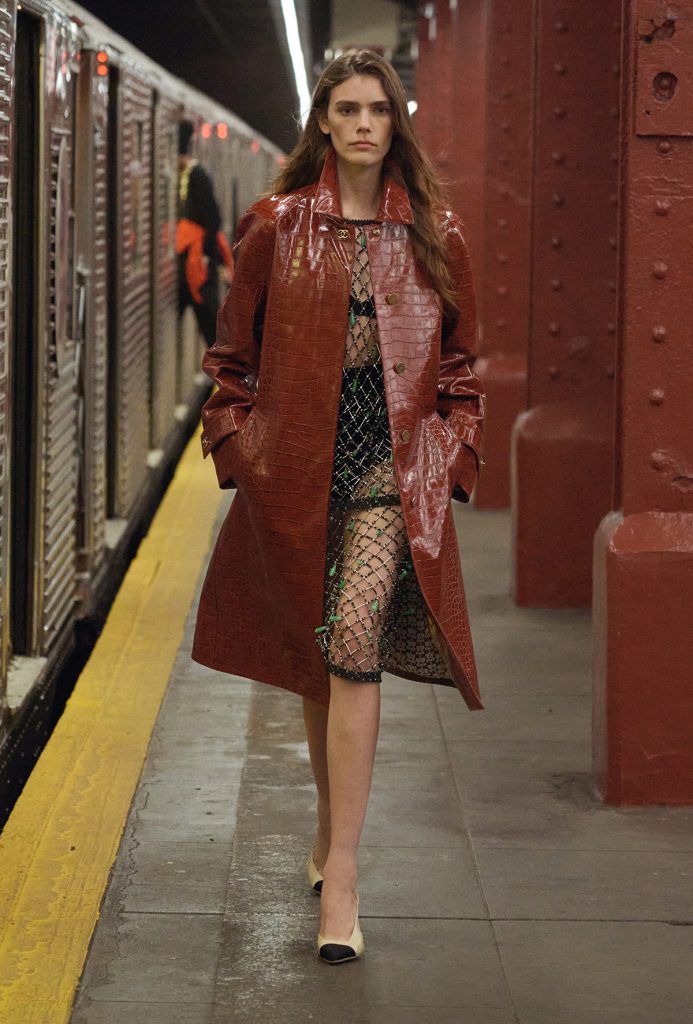
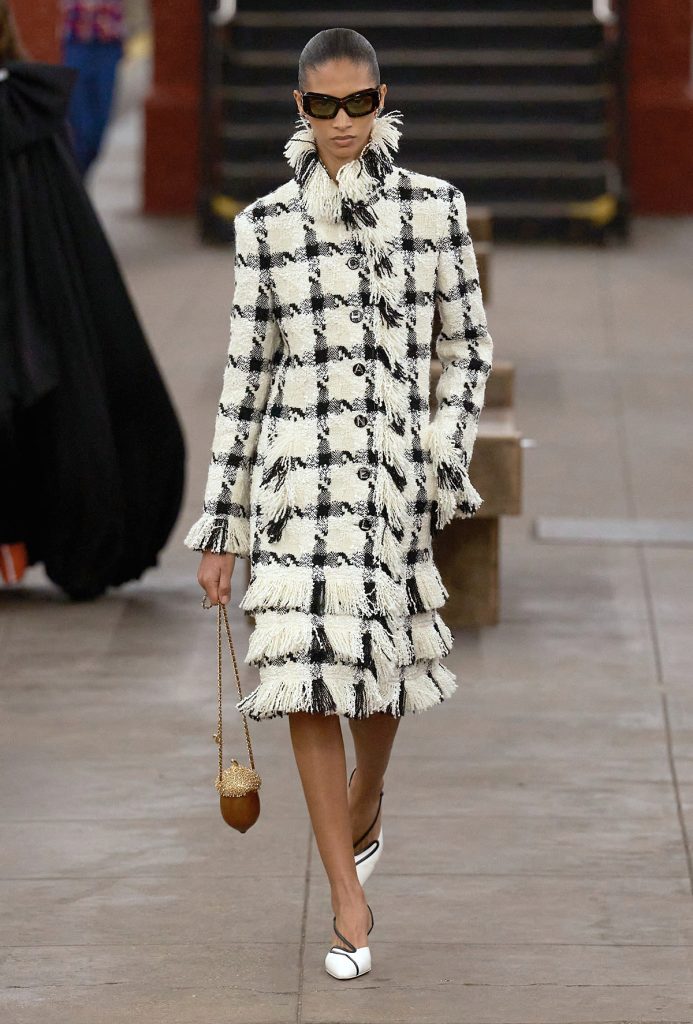
Accessories played with elevation. Minaudières shaped like enamelled monkey nuts and apples took the idea of the tourist trinket and rendered it precious. An oyster revealed a pearl inside. These joined jewelry by Goossens, including ice cube glass cabochons and deco hummingbirds. Linings featured hand painted designs of the city, including Coco Chanel walking her dog against the New York skyline.
The concept of the “urban jungle” appeared literally. A specialized, handwoven slubbed leopard tweed by Lesage dressed a figure who might be a cat lady or Catwoman. She sometimes wore a leopard fascinator from Maison Michel. A sharp black Chanel suit was paired with a classic flap bag featuring inlaid golden scales, giving the look of gilded alligator. A bias cut 1930s slip featured embroidery of shimmering fish, an Art Deco motif achieved by Atelier Montex. Classic slingbacks by Massaro anchored many looks, in traditional kidskin or a contemporary shaved shearling animal print.
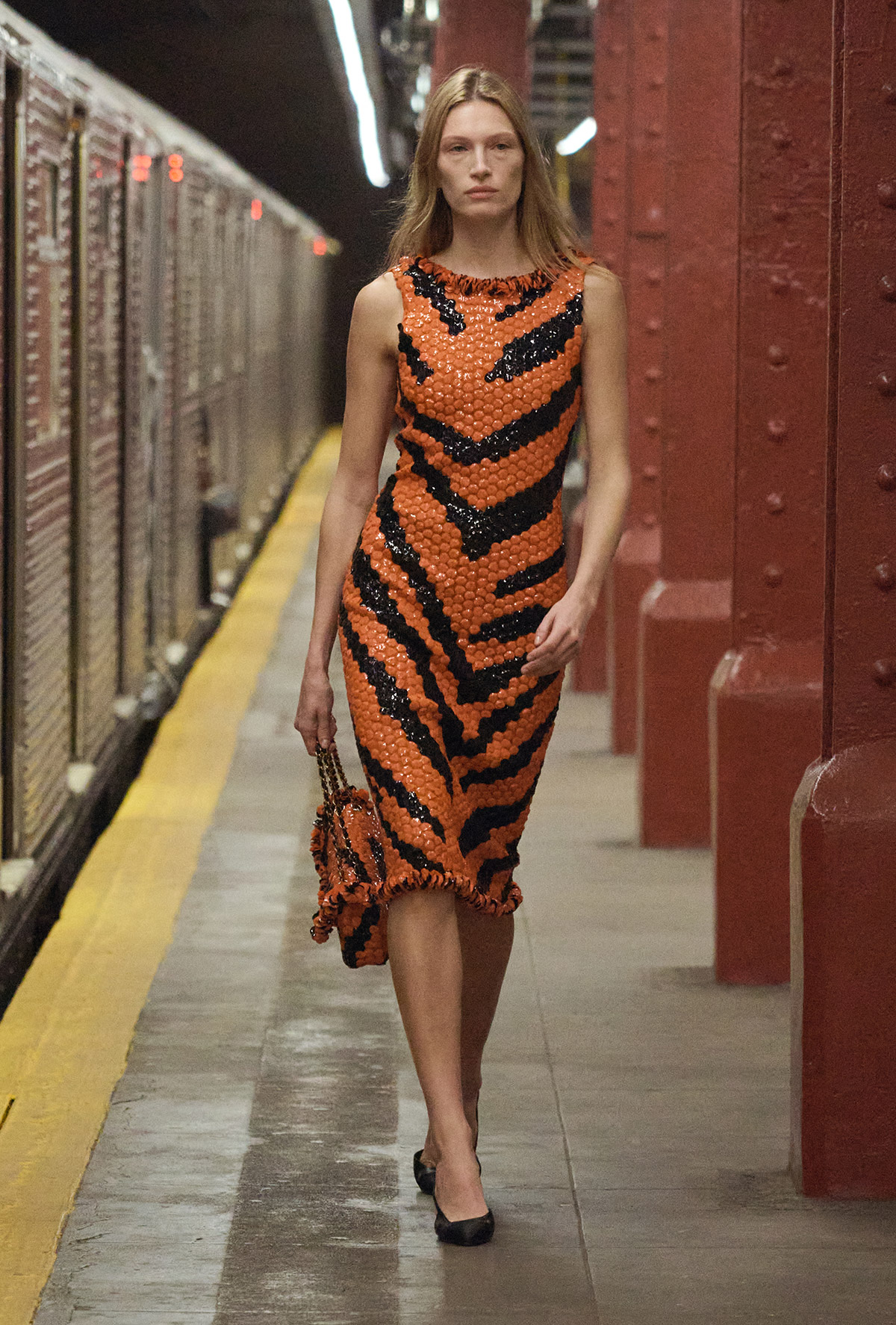
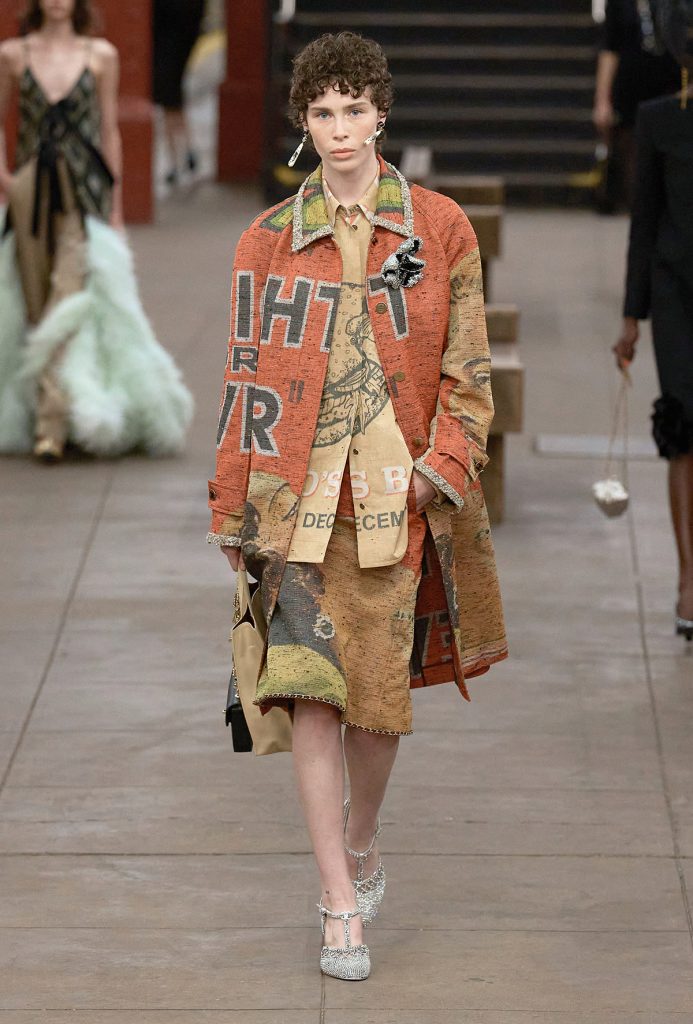
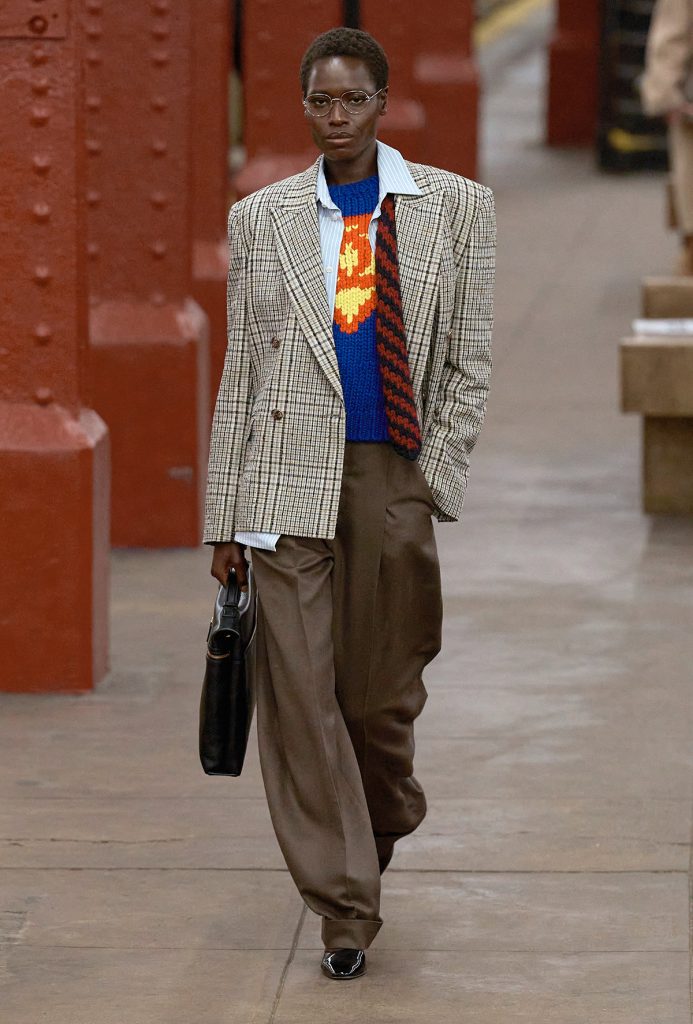
The collection draws inspiration from Gabrielle Chanel’s time in New York City in 1931, traveling to and from Hollywood at the request of movie mogul Samuel Goldwyn. While the uptown aims of Hollywood were the initial impetus, it was downtown where Chanel recognized her global appeal. Before returning to Paris, she found those who had adopted the Chanel style in their own way. She found this pop celebration of her clothing to be the sincerest form of flattery, renewing her confidence in the democratic reach of her designs.