Daniel Roseberry channels the genius of Michelangelo into a lineup of gravity-defying, venom-laced couture.
Summary
- The Epiphany: The collection stems from a specific afternoon Daniel Roseberry spent at the Sistine Chapel last October, where he realized Michelangelo prioritized raw emotion over the didactic storytelling found on the chapel’s walls.
- The Bestiary: Roseberry ditched standard beauty for “infantas terribles,” a lineup of scorpion tails, stingers, and snake teeth that merge reptilian danger with high-fashion silhouettes.
- The Technique: The atelier pushed technical limits with hand-cut bas-relief lace for 3D depth, neon tulle layered to create a sfumato effect, and accessories featuring artificial bird heads made of silk and resin.
Daniel Roseberry needed a break, so he went to Rome last October. He found himself on a last-minute tour of the Sistine Chapel, ignoring the walls painted by the army of artists who came before 1508. Those walls are there to teach you a lesson, filled with ecclesiastical scenes meant to instruct the viewer on exactly what to think.
He looked up at Michelangelo’s work and realized the Renaissance master wasn’t telling anyone what happened. He was giving them permission to feel. That permission slip became the mandate for Schiaparelli Spring 2026. Roseberry stopped obsessing over how a garment should look and started chasing the gut reaction of how it feels to make it.
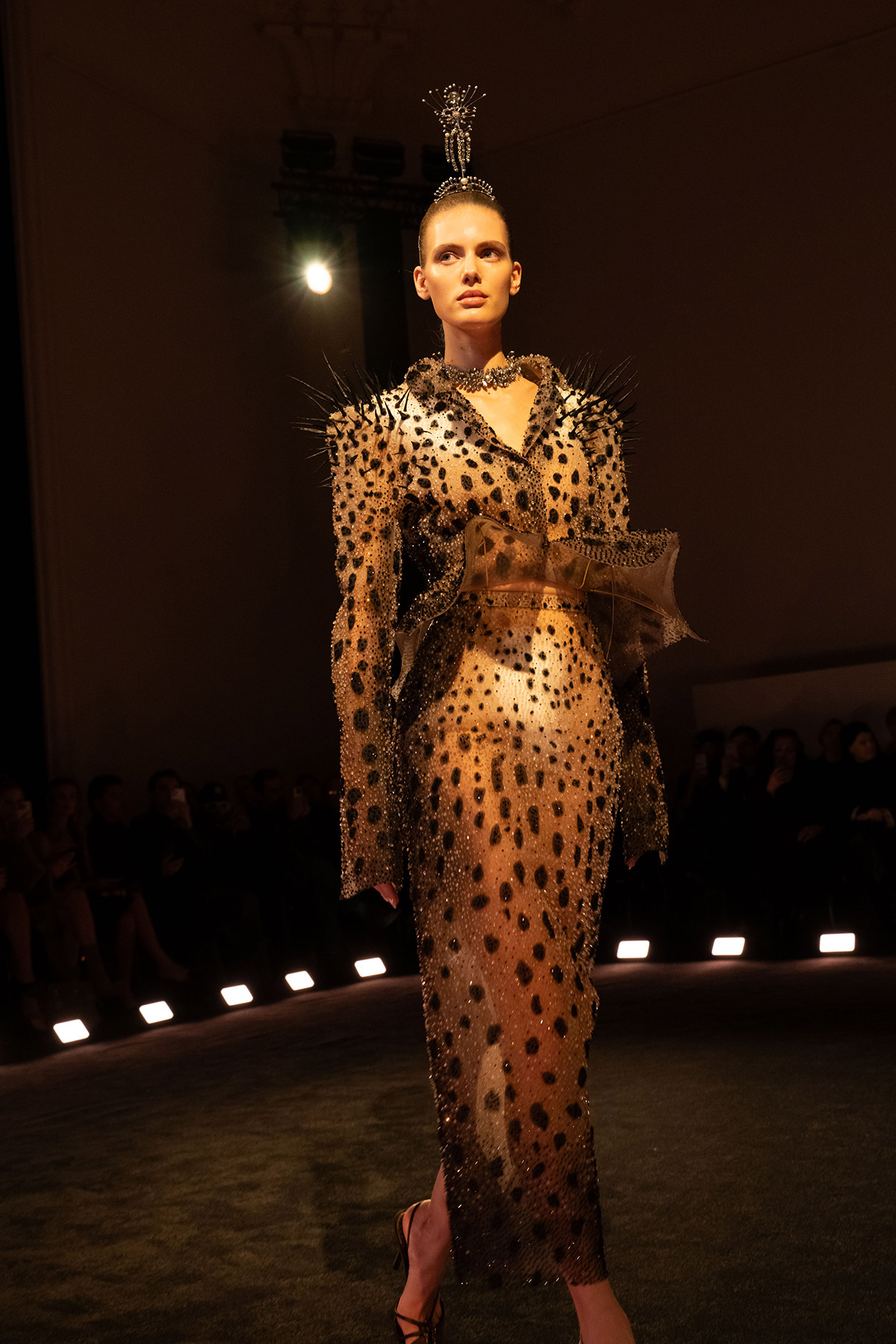
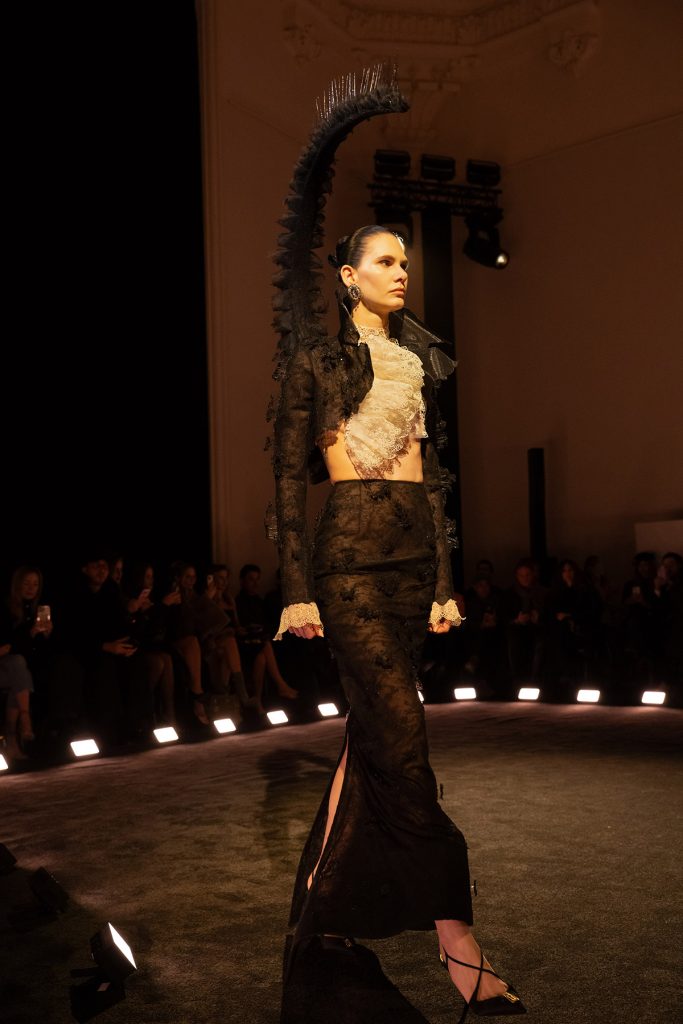
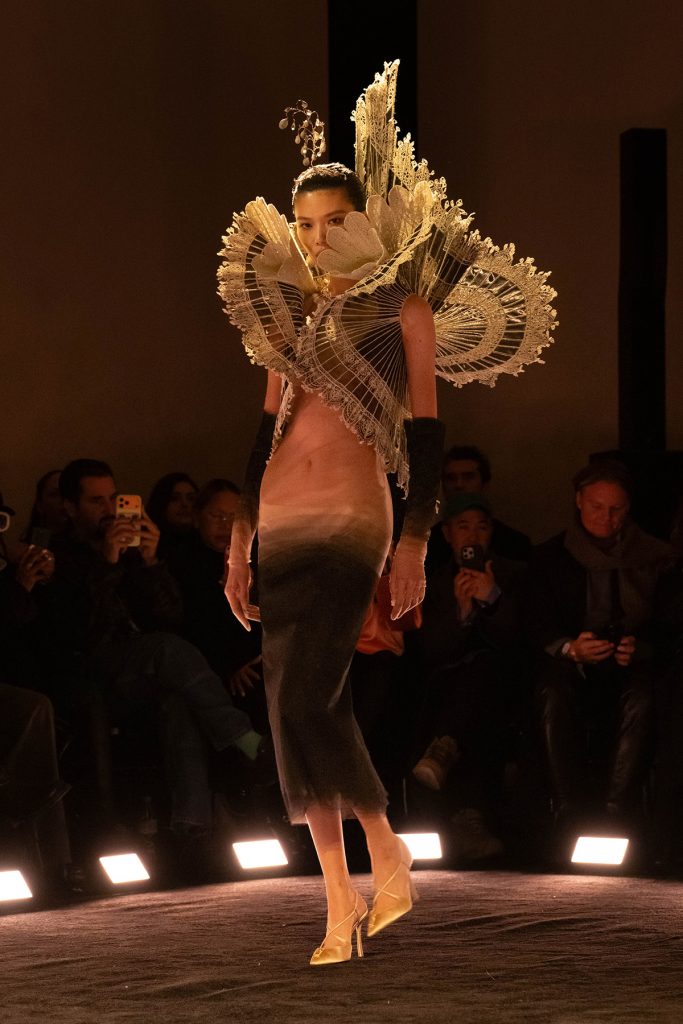
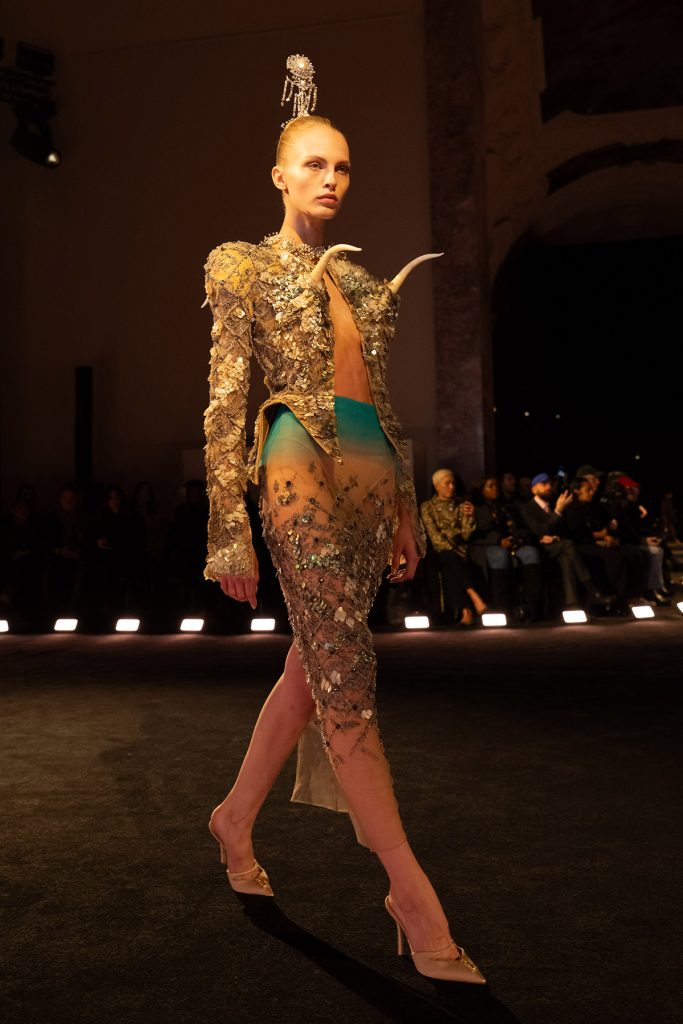
This emotional release manifested as something sharp and dangerous. Rapid squiggles in the sketchbook turned into scorpion tails and snake teeth. These weren’t soft, romantic gowns, they were “infantas terribles,” chimeraed archetypes that wove venom directly into the silhouette.
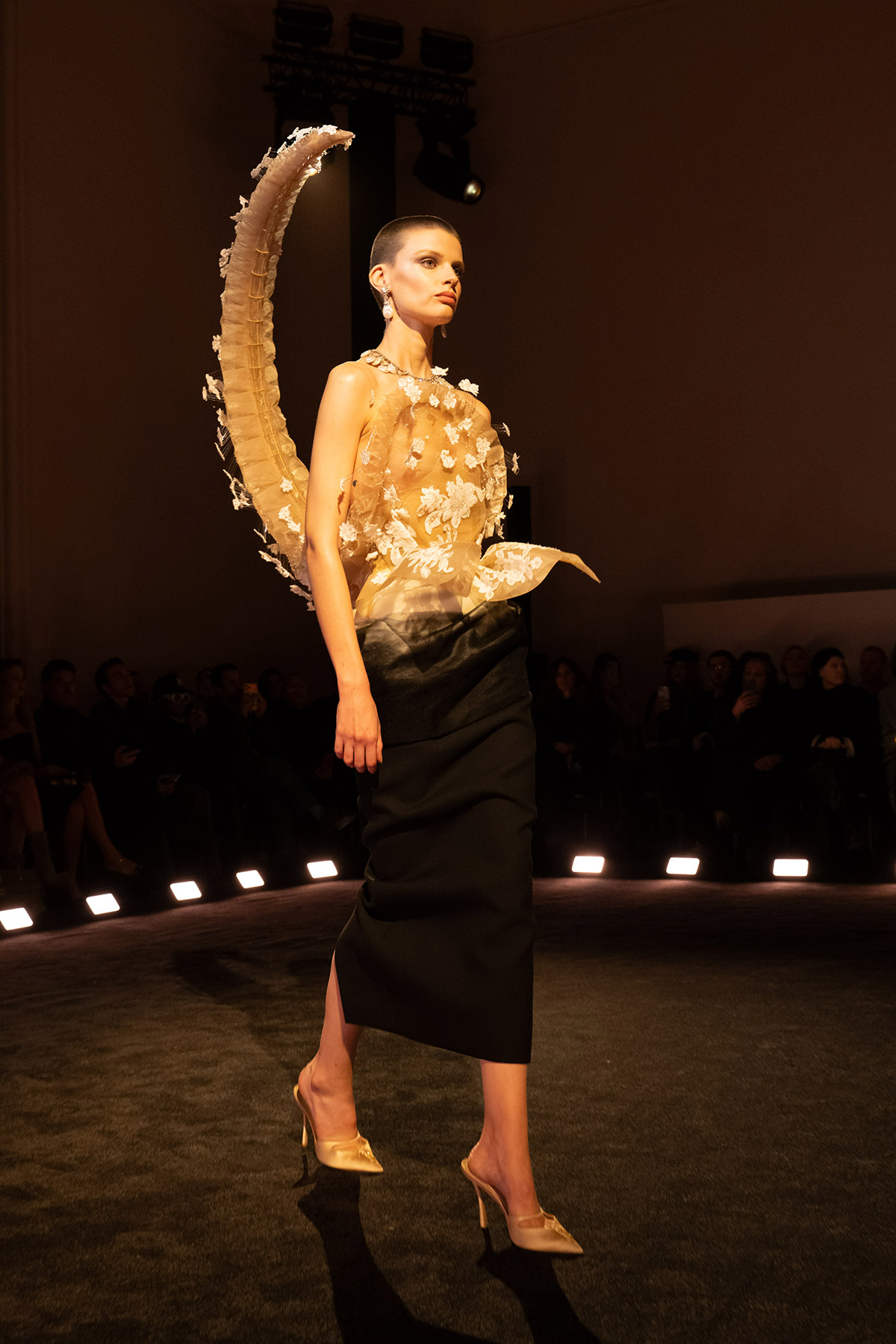
The venom found its form in the “Isabella Blowfish.” It’s a standout skirt suit constructed from layers of tulle and organza, dusted with crystal shadows in blowfish colors and finished with organza spikes. It defies gravity, much like the birds of paradise inspirations that splash pinks, blues, and saffrons across the collection.
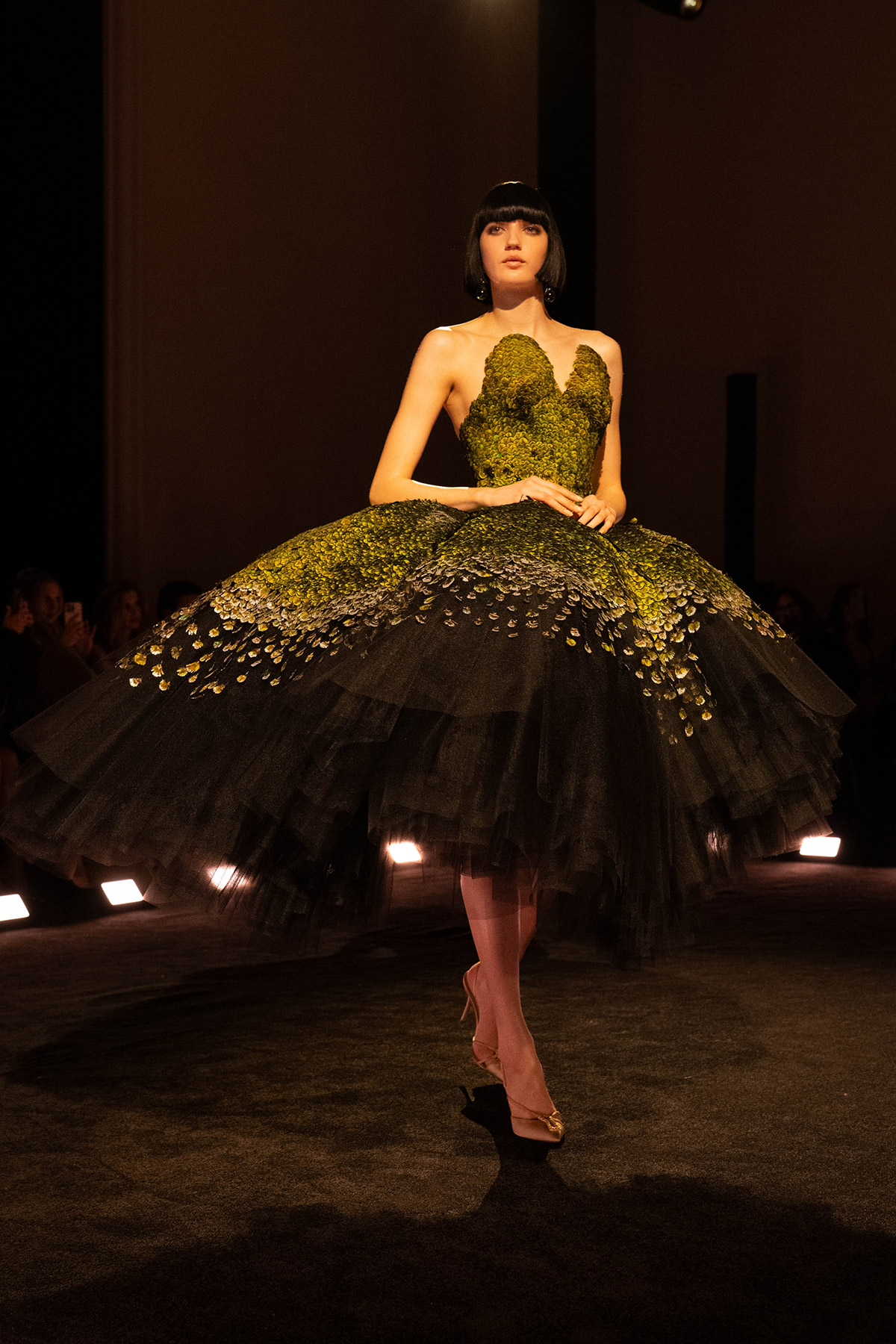
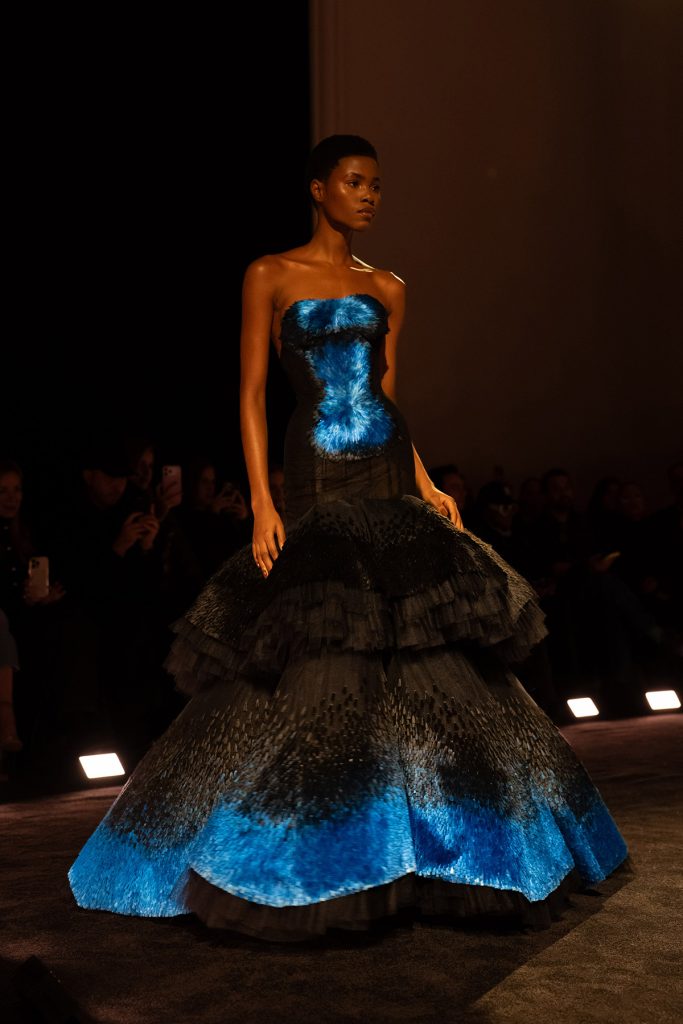
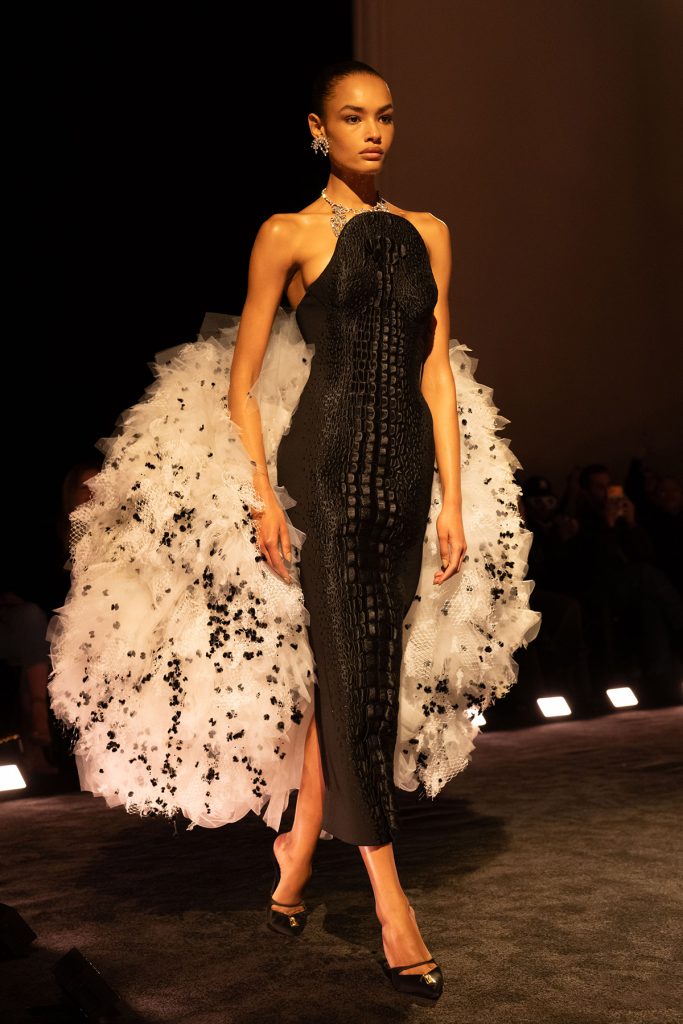
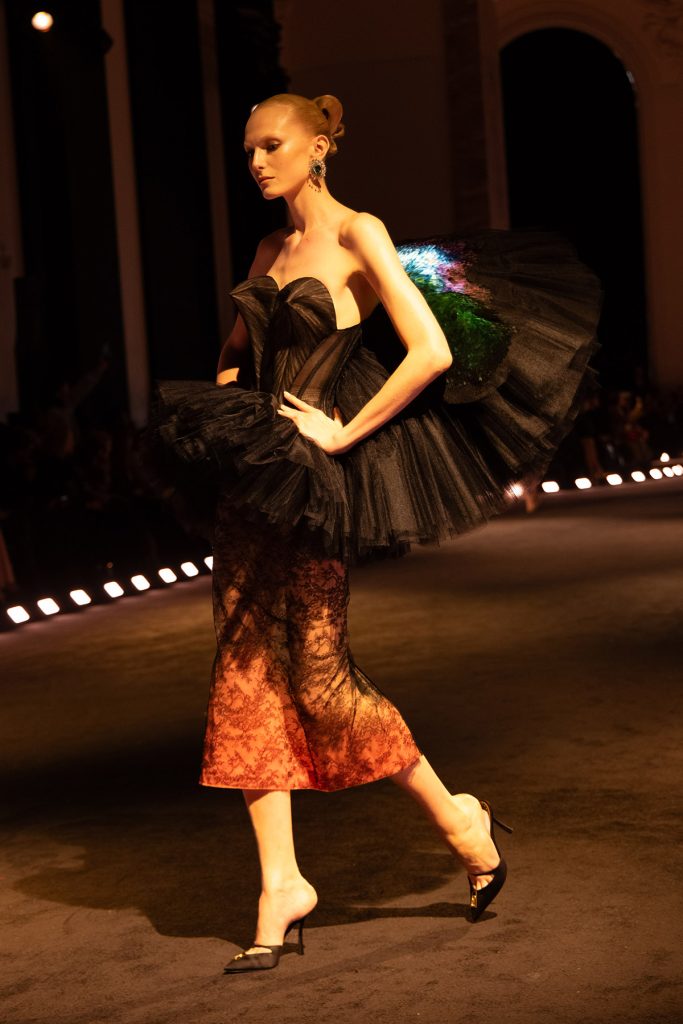
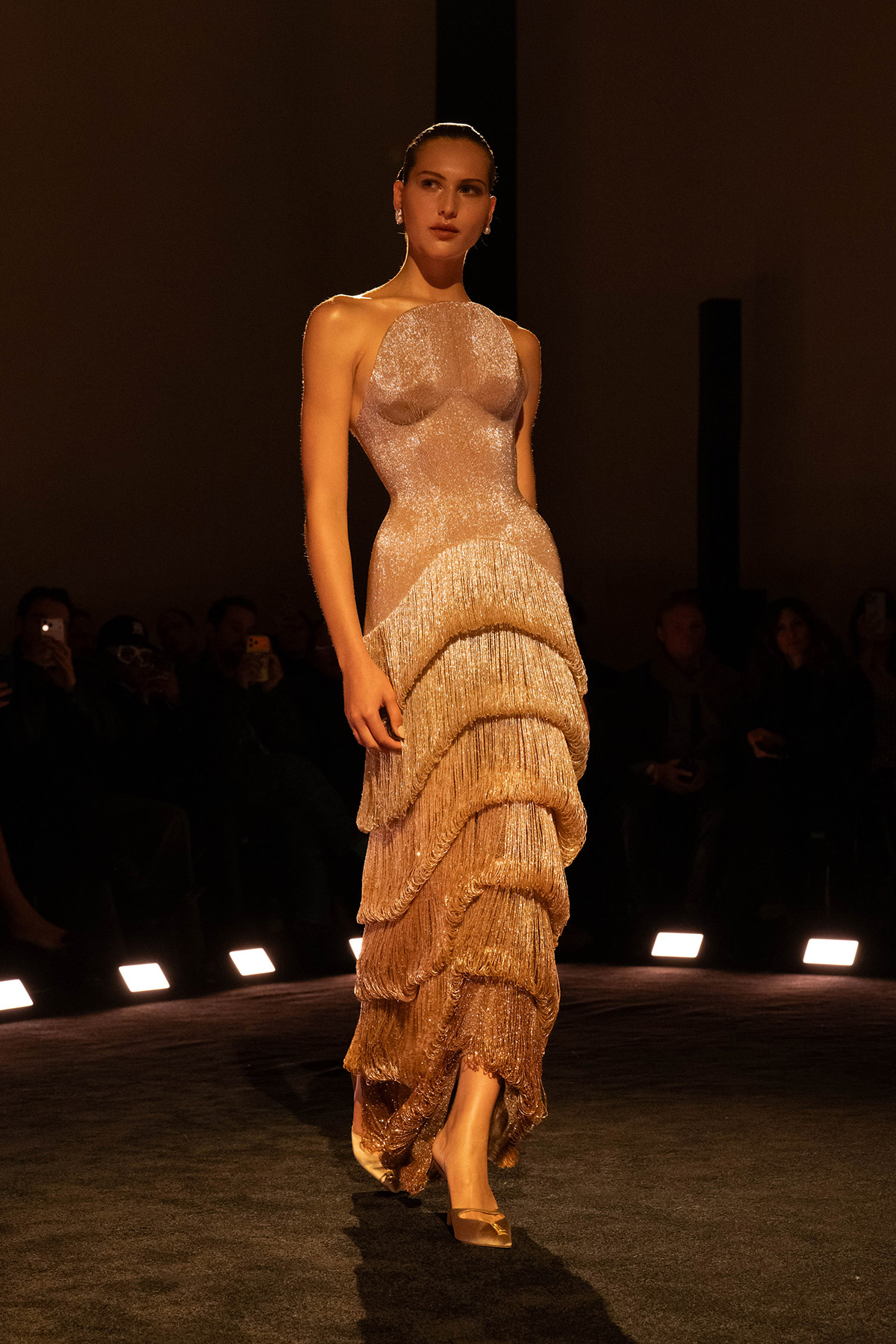
These vibrant hues demand an equally intense level of structural rigor. The atelier cut lace as a bas-relief to force a 3D effect, creating deep shadows and texture. Beneath those surfaces, layers of neon tulle stack up to produce a sfumato haze, while feathers get the hand-painted, airbrushed, or resin-dipped treatment.
That resin work extends to the accessories, which bristle with artificial bird heads. These sculptures, crafted from silk feathers with resin beaks and pearl cabochon eyes, pay homage to nature without harming it. They also nod to Elsa Schiaparelli’s own obsession with the creatures of the sea and sky, recalling the lobster icon that remains tethered to the house.
Elsa’s fascination with the wild mirrors Roseberry’s current stance on the purpose of couture. It isn’t about clothing for daily life or the reality of the rest of the year. It is an invitation to connect with the hopeful adolescent who chose fashion.