The LVDB-03 Louis Varius Project puts De Bethune’s technical savoir-faire inside Louis Vuitton’s most recognizable silhouette.
Summary
- The Collaboration: Louis Vuitton’s watch division continues its support of independent horology by tapping De Bethune co-founder Denis Flageollet for a third distinct chapter.
- The Mechanics: The team revived the 18th-century “Sympathique” concept, where the wristwatch mechanically rewinds and resets itself when docked into a companion table clock.
- The Metal: The aesthetic centers on De Bethune’s signature heat-treated blue titanium and a starry dial that hides the LV initials within a constellation of white gold pins.
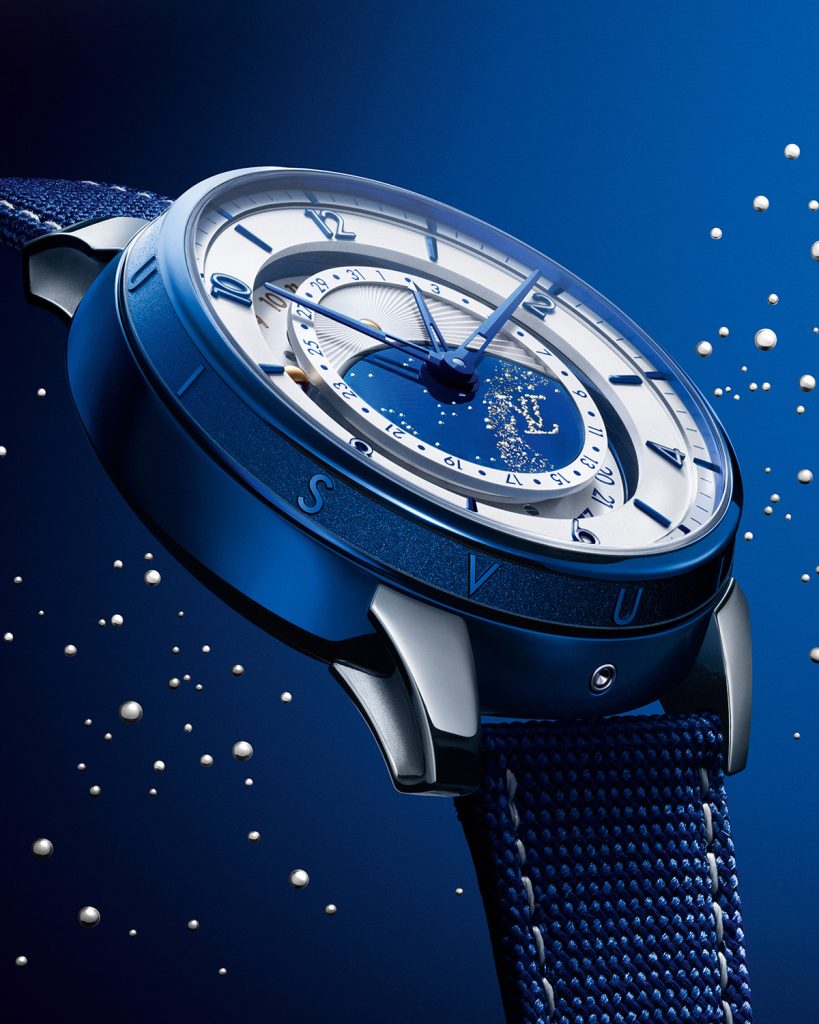
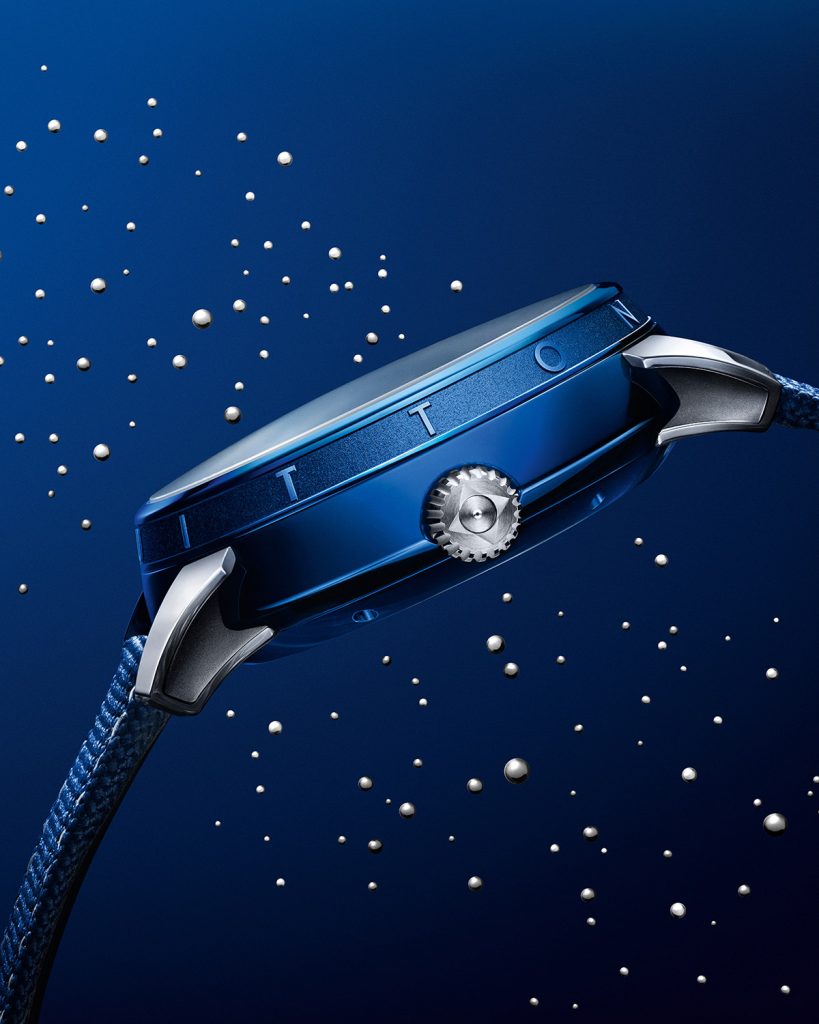
Denis Flageollet knows how to cook titanium. The De Bethune co-founder and Master Watchmaker applies a proprietary thermal oxidation process to the metal until it turns a deep, electric blue. This specific shade defines the LVDB-03 Louis Varius Project, the third entry in a series where Jean Arnault hands the keys to an independent creator. The resulting surface catches reflections that shift and move, giving the metal a life of its own.
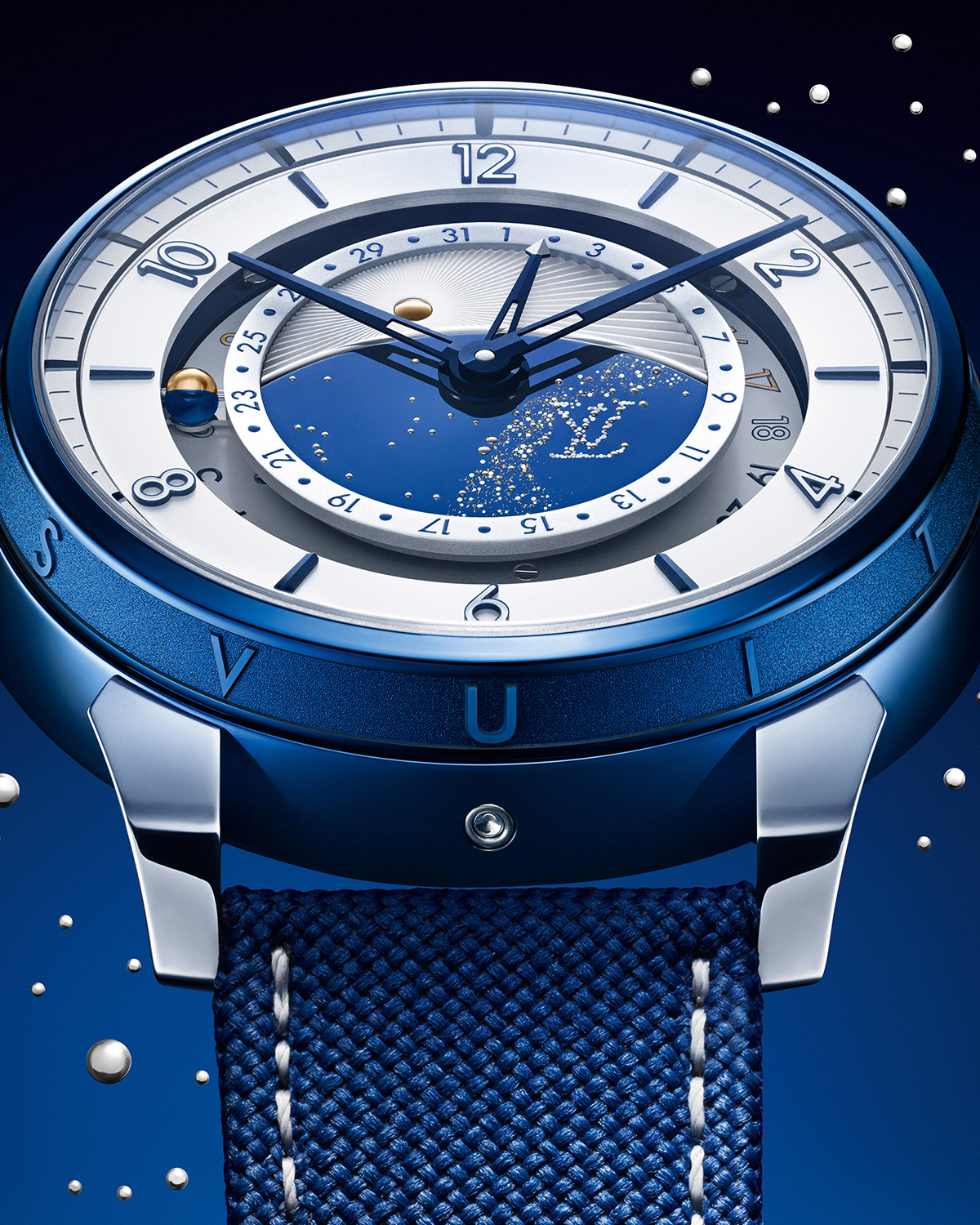
That liveliness extends to the silhouette of the Tambour Taiko case. Polished titanium forms the body, but the bezel gets granular with sandblasted Louis Vuitton letters. Twelve of them ring the dial, polished individually to stand out against the matte texture. A hand-finished crown sits at three o’clock, sporting the Monogram Flower and mixing satin-brushed finishes with high polish. This component does more than look good, as it physically locks into the larger “Sympathique” clock to create a mechanical handshake between the two objects.
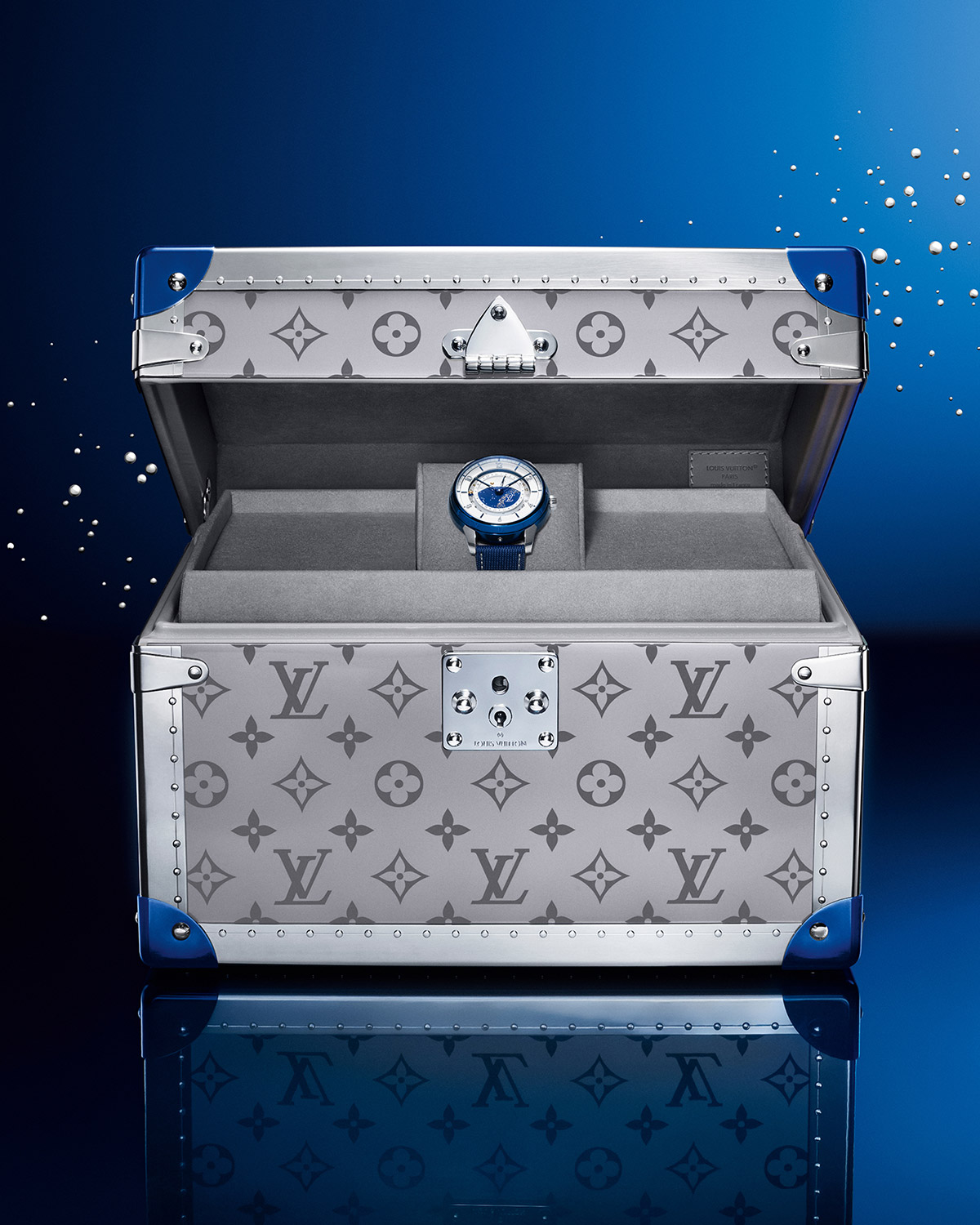
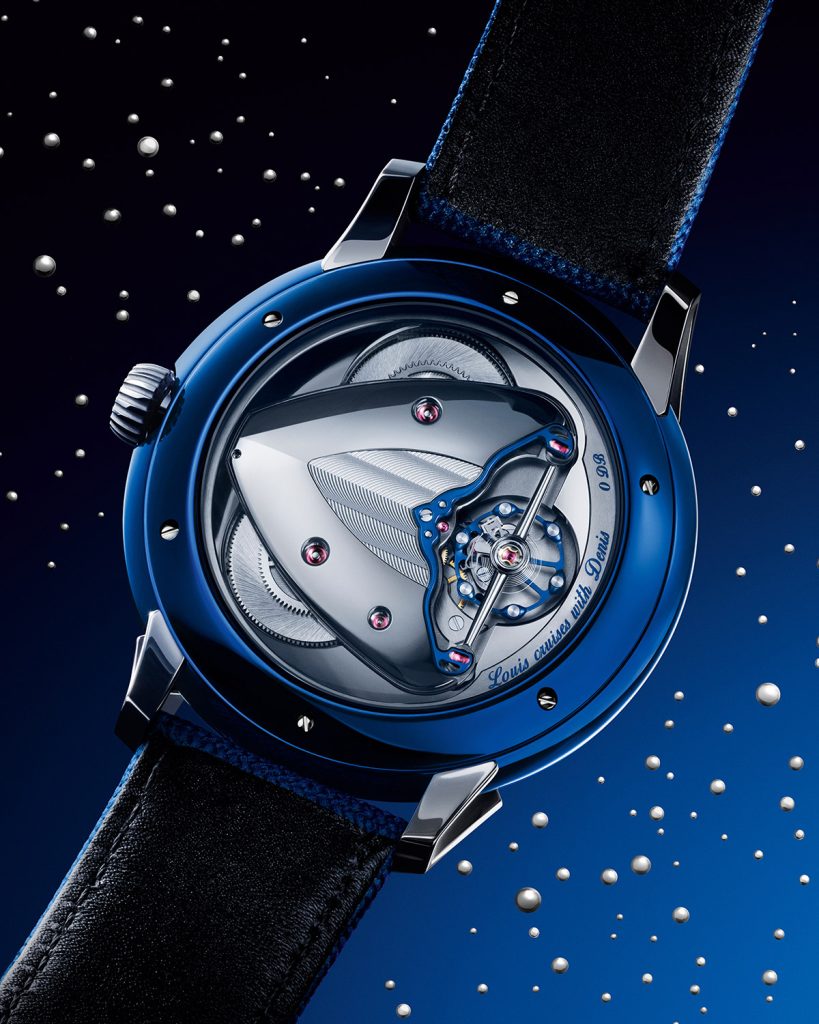
This handshake relies on a concept that dates back to the 1700s. The Sympathique system allows the table clock to act as a base station for the wrist unit. When the owner docks the watch, the clock automatically rewinds the movement and sets the time. De Bethune built the Calibre DB2507LV specifically to handle this transfer of energy. The manual-winding engine packs a five-day power reserve and includes a silicon escape wheel alongside a triple pare-chute shock-absorption system.
Those shock absorbers protect a movement designed explicitly for the long haul. The calibre tracks a second time zone, distinguishes between day and night, and features a jumping date. These functions align with the house’s historical obsession with travel, all regulated by a blued-titanium balance wheel with white-gold inserts. Just above the mechanics, the dial displays a map of stars that hides a secret.
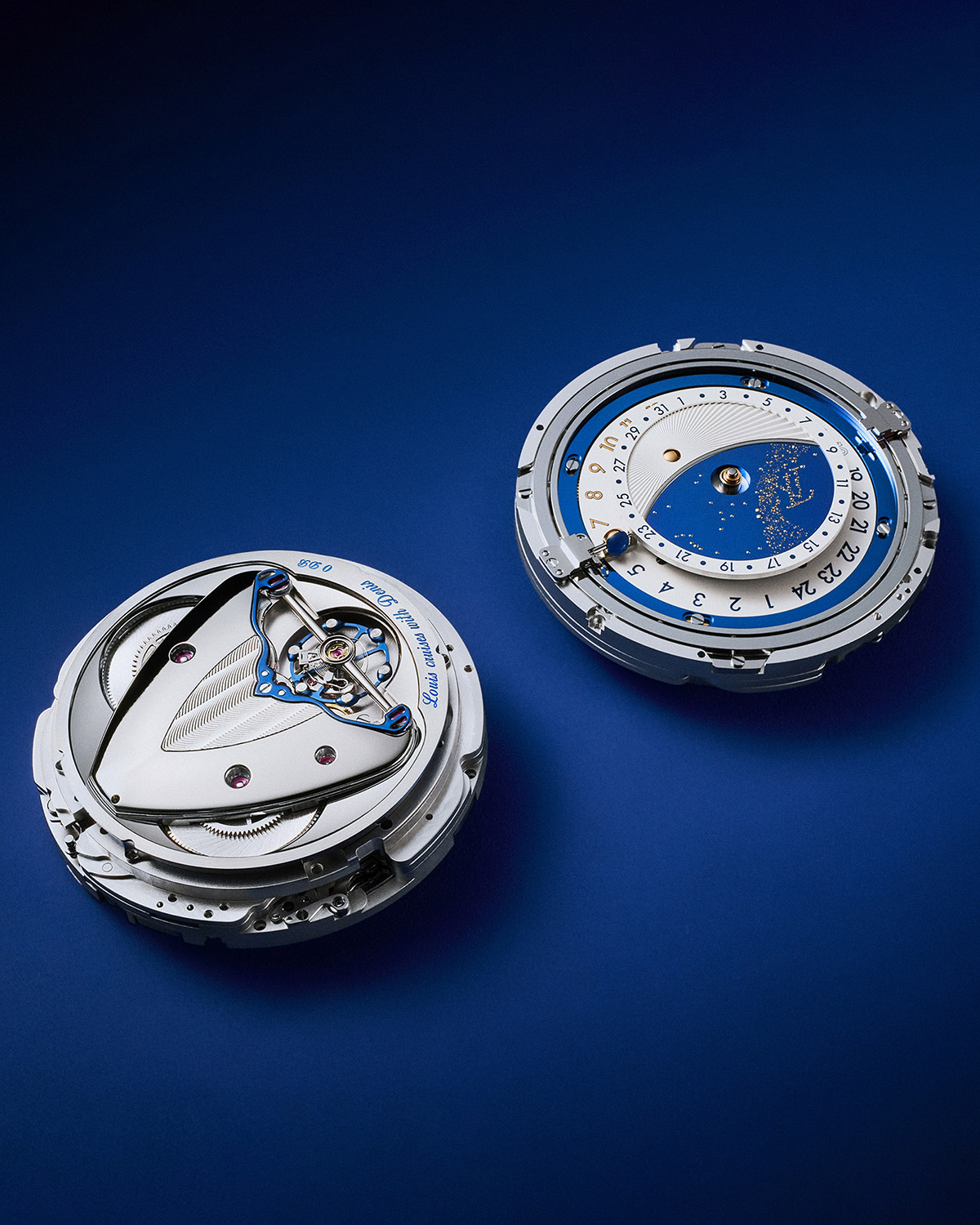
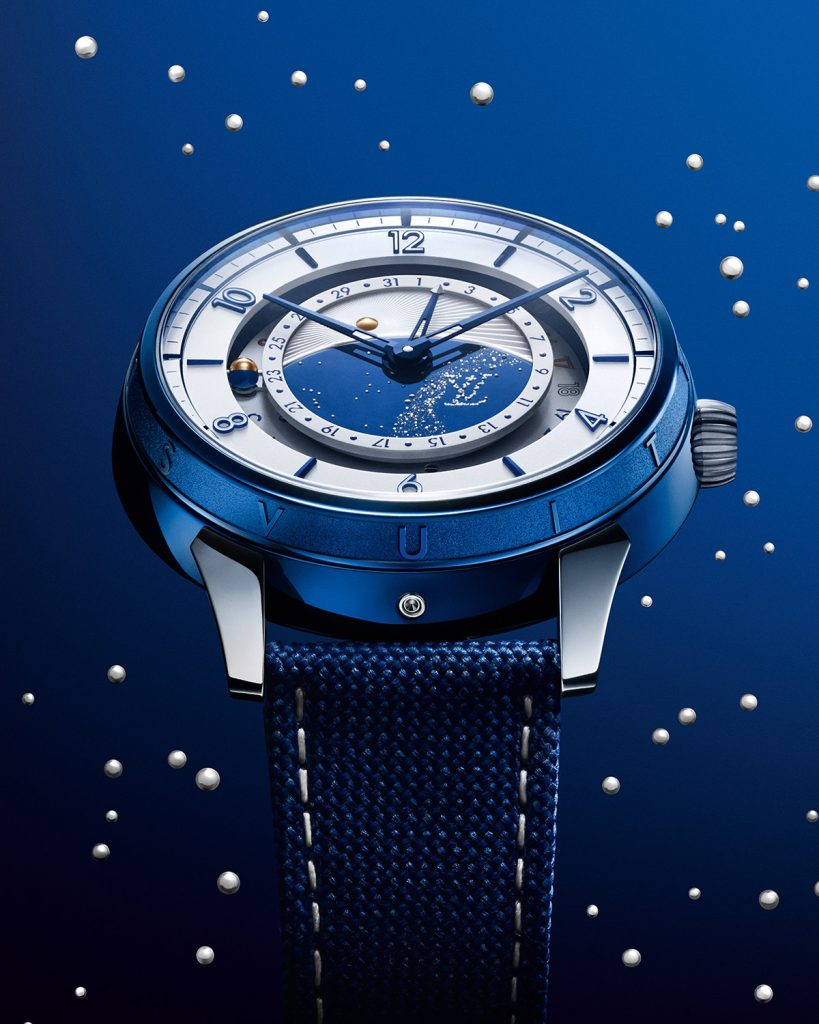
The secret lies in the arrangement of the white-gold pins. Flageollet’s team sets these pins by hand into micro-perforations to create a constellation that subtly spells out “LV.” An artisan applies gold leaf to the surface to add texture to the celestial scene. This careful arrangement of precious metal sits next to a spherical indicator that spins to tell you where the sun is.
This spinning sphere rotates fully twice a day. One half glows in 5N rose gold to show the daylight hours, while the other side uses flame-blued steel to represent the night. A traditional alcohol lamp achieves that specific dark navy hue. Faceted hands sweep across the opaline surface, completing a package that combines Matthieu Hegi’s design direction with Flageollet’s technical obsessions.