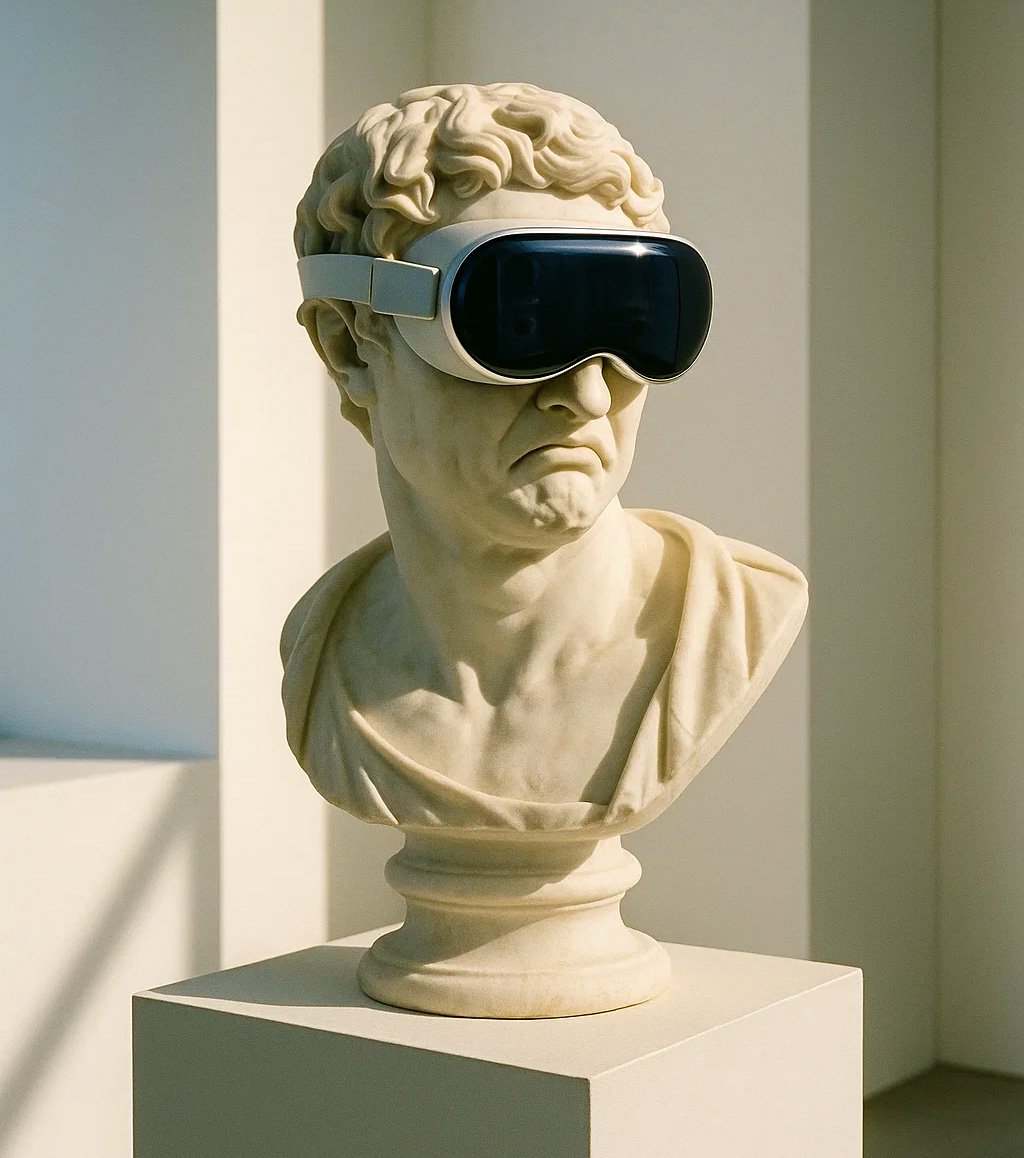
Previous technological changes allowed decades for adaptation; this time, the transformation is happening in months, and the industry is not prepared.
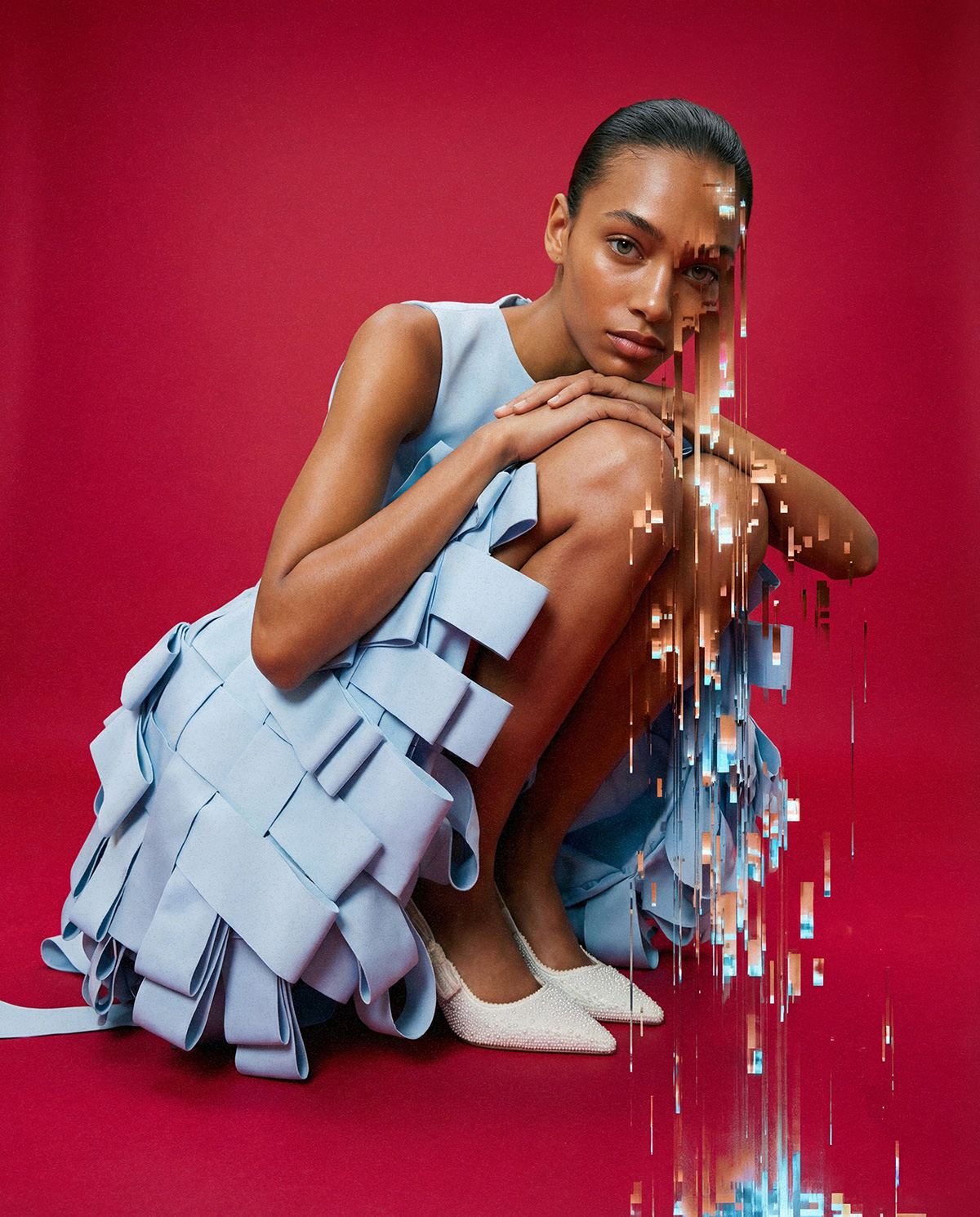
Summary
- The inevitability of AI in fashion is driven by the rapid acceleration of capital investment, $252.3 billion globally in 2024 alone, prioritizing economic efficiency over traditional creative craft.
- A significant dislocation of the creative workforce is imminent as execution skills are automated; 32% of organizations already anticipate workforce reductions in the next year due to the adoption of AI.
- Value is shifting from technical execution to aesthetic curation and IP management, forcing a reorganization of creative roles and agency models.
The fashion industry has a predictable response to new technology. I remember the arrival of digital photography, which prompted film loyalists to declare the death of authenticity. When print media moved online, out of touch editors defended the sanctity of the glossy page, clinging to their print runs like aristocrats clutching the family silver during a revolution.
We are witnessing this pattern again with generative AI, but the accompanying mood music is different. This time, there is genuine anger and a palpable fear. This is understandable. The machine is learning by consuming the very work of the creatives it intends to replace.
Previous technological changes allowed years, sometimes decades, for adaptation. This transformative technology is arriving with supersonic speed, compressing a decade of development into mere months.
The driver is not aesthetic curiosity, but the sheer weight of capital investment. Global investment in AI reached $252.3 billion in 2024, a 44.5% increase over the previous year, according to the 2025 AI Index Report from Stanford HAI. With capital moving at this velocity, resistance is irrelevant.
The Collapse of the Content Engine
The immediate effects will be felt most acutely in the engine room of image making: photographers, art directors, and stylists. The economics are undeniable and unforgiving. The choice between a five-figure day rate for a full studio team and a few hundred dollars in computing credits is not a choice at all. It is an inevitability.
The high-volume work that pays the bills for most creatives, particularly e-commerce catalogs and social media content, will evaporate. This work is often treated like aesthetic fast food, necessary but uninspiring, making it the prime candidate for automation. The mid-tier commercial photographer, the one shooting lookbooks and basic product shots, will no longer be economically viable for most brands.
The disruption extends to the infrastructure supporting the image. Set designers and location scouts face a severe threat as physical builds are replaced by virtual environments.
Hair stylists and makeup artists may find themselves slightly insulated. AI cannot physically prepare a celebrity for the gala. The need for human touch in personal service provides a buffer. Survival for these professionals relies on pivoting away from volatile commercial image making and toward private clients, events, and red carpet appearances where physical presence is mandatory.
The New Hierarchy: The Visual Engineer
The creatives who survive this purge will not be the technicians. They will be the conceptualists. Their value moves from execution to direction.
The new premium skill is not photography, but visualization, not styling, but engineering the visual output. The path forward for image makers is to become visual engineers, training bespoke models on a brand’s specific aesthetic or their own historical work. The value is in creating a unique visual language that AI cannot generate by default.
AI currently produces a regression to the mean, it generates what is statistically probable. True aesthetic leaps require human intuition. The enduring value lies in taste and deep cultural knowledge. Professionals who possess this can transition into high-level direction and curation, identifying which synthesized images align with a sophisticated vision, treating the AI less like a tool and more like a very literal, very expensive intern.
The Studio and the Entry-Level Void
Inside the design studios, the teams will shrink. Generative AI excels at iteration. It can produce thousands of variations on a silhouette faster than a team of junior designers. The role of the Creative Director will remain, but the support structure beneath them will contract.
The designer’s role is shifting from maker to curator-in-chief. The modern designer must develop AI literacy, capable of translating abstract aesthetic concepts into the technical language of the algorithm. The process changes from “gut feeling” to “data-informed intuition.” However, as iteration is automated, deep technical knowledge of garment construction, fit, and physical fabric behavior becomes the critical human differentiator against purely digital outputs.
The reorganization of the workforce is already anticipated by management, even if they are reluctant to say it loudly. Thirty-two percent of respondents in the McKinsey survey expect decreases in their organization’s overall workforce size in the coming year due to AI.
The Digital Twin Economy
Modeling agencies face a perhaps existential threat. The normalization of AI-generated models is already underway. Initiatives creating digital clones of human models for infinite deployment signal the ultimate decoupling of the model’s image from the model’s labor.
Brands will reserve human talent only for high-visibility campaigns, where authenticity (or the convincing performance of it) still holds market value. The vast majority of commercial imagery will be AI generated.
This creates a bifurcated economy. Top-tier talent can license their digital twins for premium rates; their likeness is a scarce asset. The “middle class” of modeling, the anonymous faces that populate e-commerce sites, face obsolescence. AI platforms will replicate their looks for a nominal monthly fee.
To survive, agencies must redefine their business model entirely. This means moving from booking a model’s time to managing their intellectual property. A unique look becomes a licensable product, a digital asset, much like a musician licenses a song. Agencies will function less like talent brokers and more like record labels, managing authorized digital twins, guided by emerging legislation that mandates clear consent for digital replicas.
The industry is moving from making things to prompting them. What remains is taste, the ability to select the winning image from a thousand synthesized options. This shift will separate those who manage the machine from those who are managed by it.
The Transfer of Value
We are witnessing a massive transfer of value. The industry is moving from making things to prompting them. What remains is taste, the ability to select the winning image from a thousand synthesized options. This shift will separate those who manage the machine from those who are managed by it.